BOYABAT KERCHIEF
Boyabat Kerchief is woven in Boyabat district of Sinop Province. Boyabat Kerchief weaving has an approximately two centuries history within the region. Boyabat Circle, which was used in the past by covering a fez called "prepri", is now used to cover the head directly.
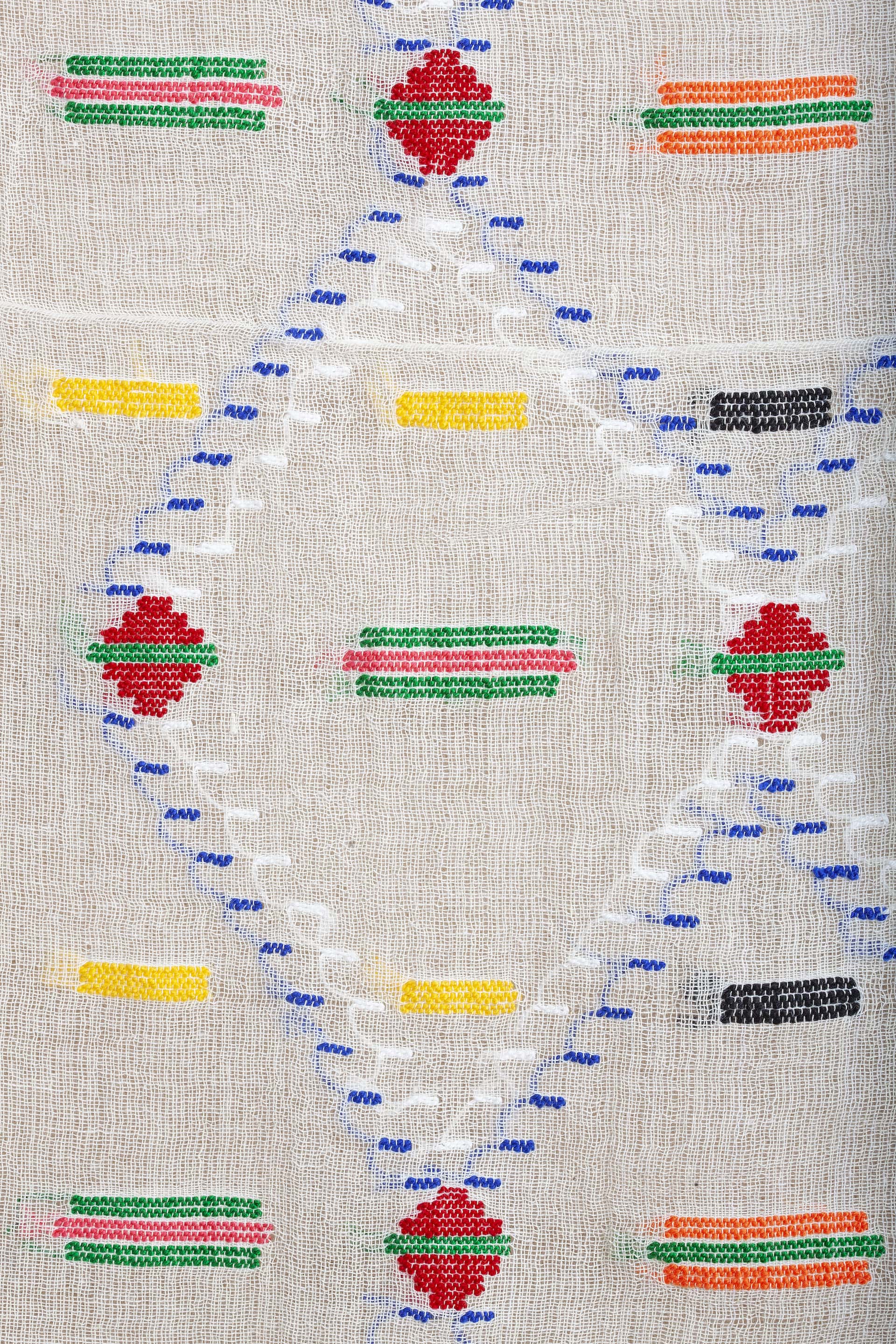
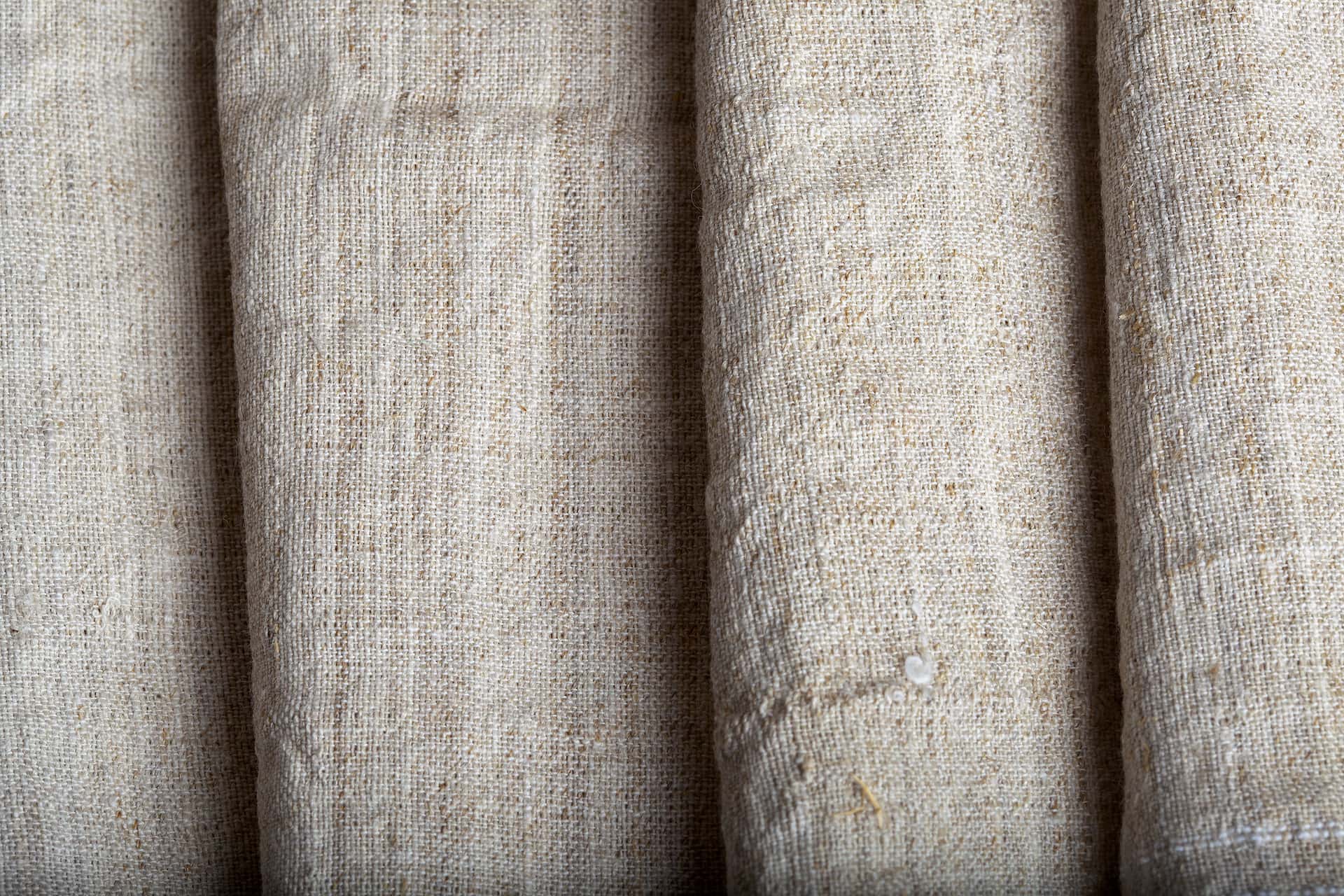
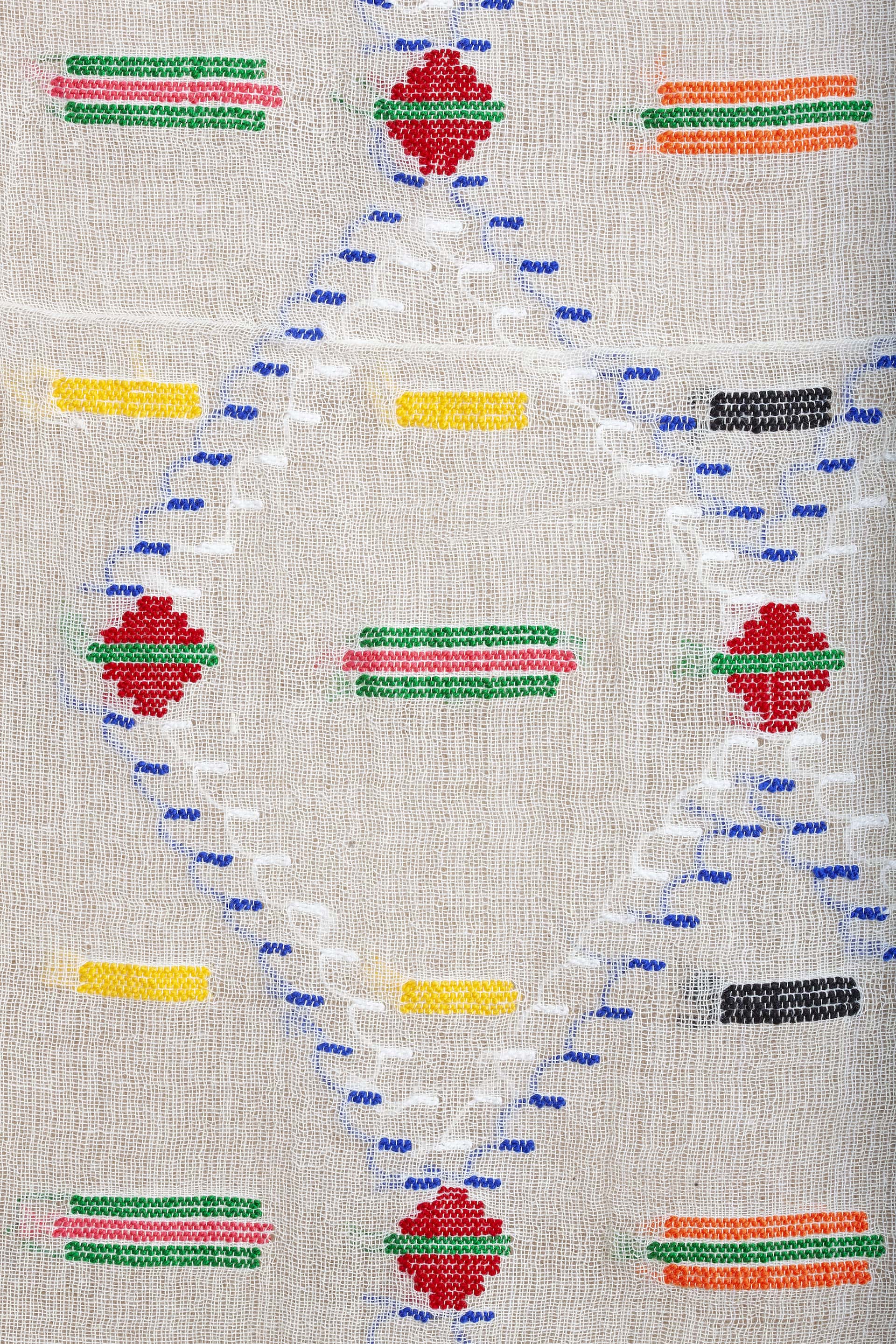
Boyabat Kerchief is a 50-60cm wide-long local weave which has plain weaving weft, shaped with three rows of red pattern scarves in crosses/plaids on all four sides, woven with coloured pattern scarves on a white background. In the very old examples, the warp and weft were linen, the pattern wefts were cotton, while cotton material was generally used in the warp, weft and pattern threads. The colouring pattern of the kerchief is usually as follows: white colour (natural cotton colour) on the ground of the weaving, red and white on the edge lines, and red, dark red, green, blue, yellow, orange, turquoise, pink and magenta in the pattern yarns. Patterns are created by additional weft threads of different colours and thicknesses. The four sides of the circle are striped and the corners are crossed/plaid. The Boyabat Kerchief is not famous for its design name, but for the pattern used on it. (In local names) Zincir, Sinek, Süydürme, Enikızı, Aybütünü, Mühür, Dört Müdür, Ersünlü, Koyun Gözü, Kaymalı, Gürel, Sandık, Put, Dört put bir arada, Heybe, Demirkırat are the mostly seen patterns. Headscarves and veils are made from the Boyabat Kerchief.
Effective as of 13.02.2008 in accordance with the Article No. 12 of the Decree no. 555 on the Protection of Geographical Indications published in the Official Gazette dated 12.07.2009 and no. 27286, Boyabat Kerchief had the country of origin no. 126 as a result of the application by Boyabat Mayorship.