PEMBEZAR / PENBEZAR
Pembezar weave was woven in İzmir-Ödemiş, Denizli-Buldan, Muğla-Milas regions. It is known that Pembezar weaves were widely used in the Birgi quarter of Ödemiş, İzmir. Birgi, which was the capital of Aydınoğulları Principality in the 1300s, is now a quarter of Ödemiş. Many sources mentioned silk and silk fabric production within the region. Ibn-i Batuta and Evliya Çelebi mentioned Birgi in their writings with admiration. The fact that the pembezar was frequently mentioned in the Heritage records and the Sharia Registries provides information about the prevalence of its use at the time. In Aydın Province Yearbook of 1884, Ödemiş was mentioned as a region where production and sales were made with hundreds of hand looms. Pembezar weaving is woven in only a few workshops today.
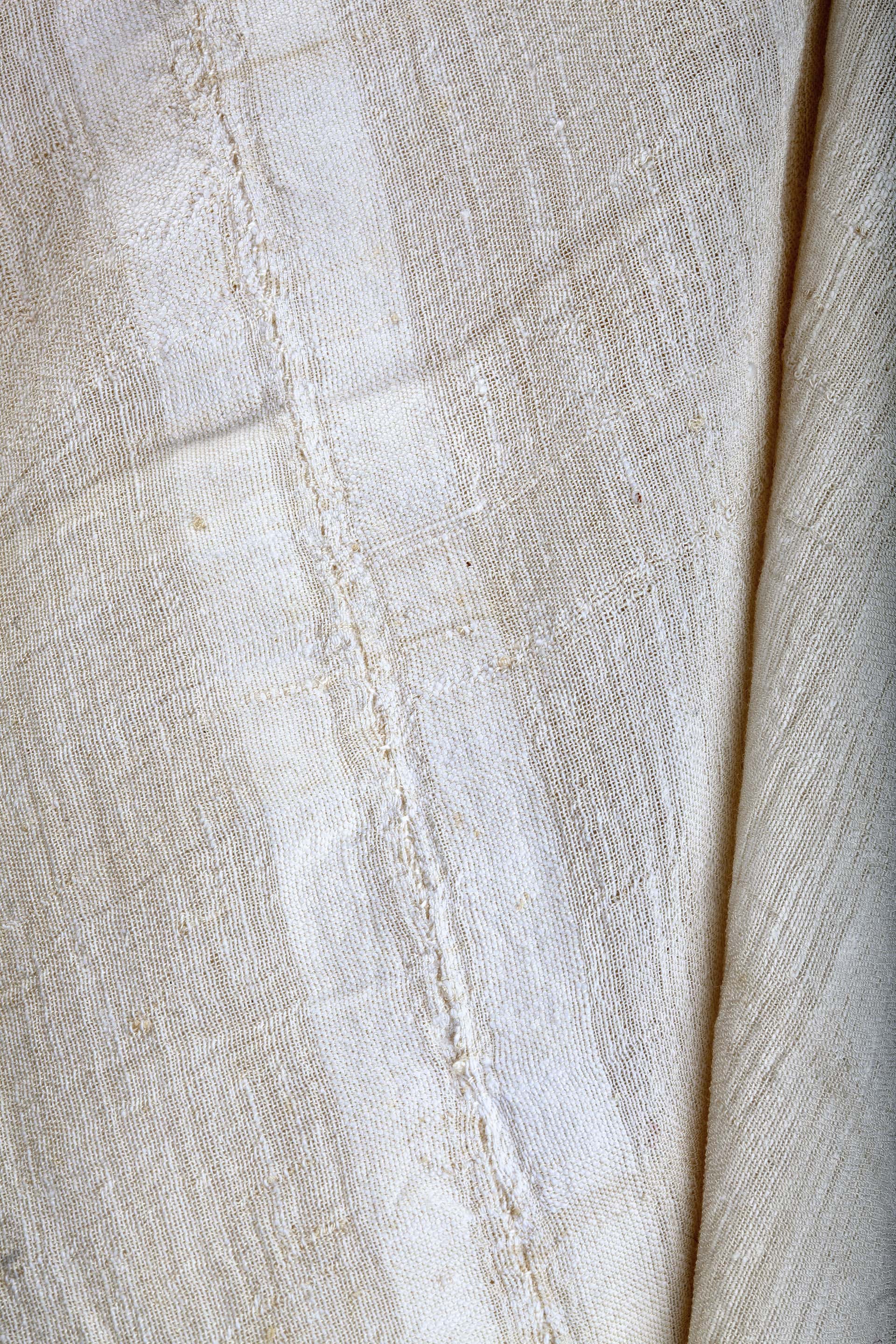
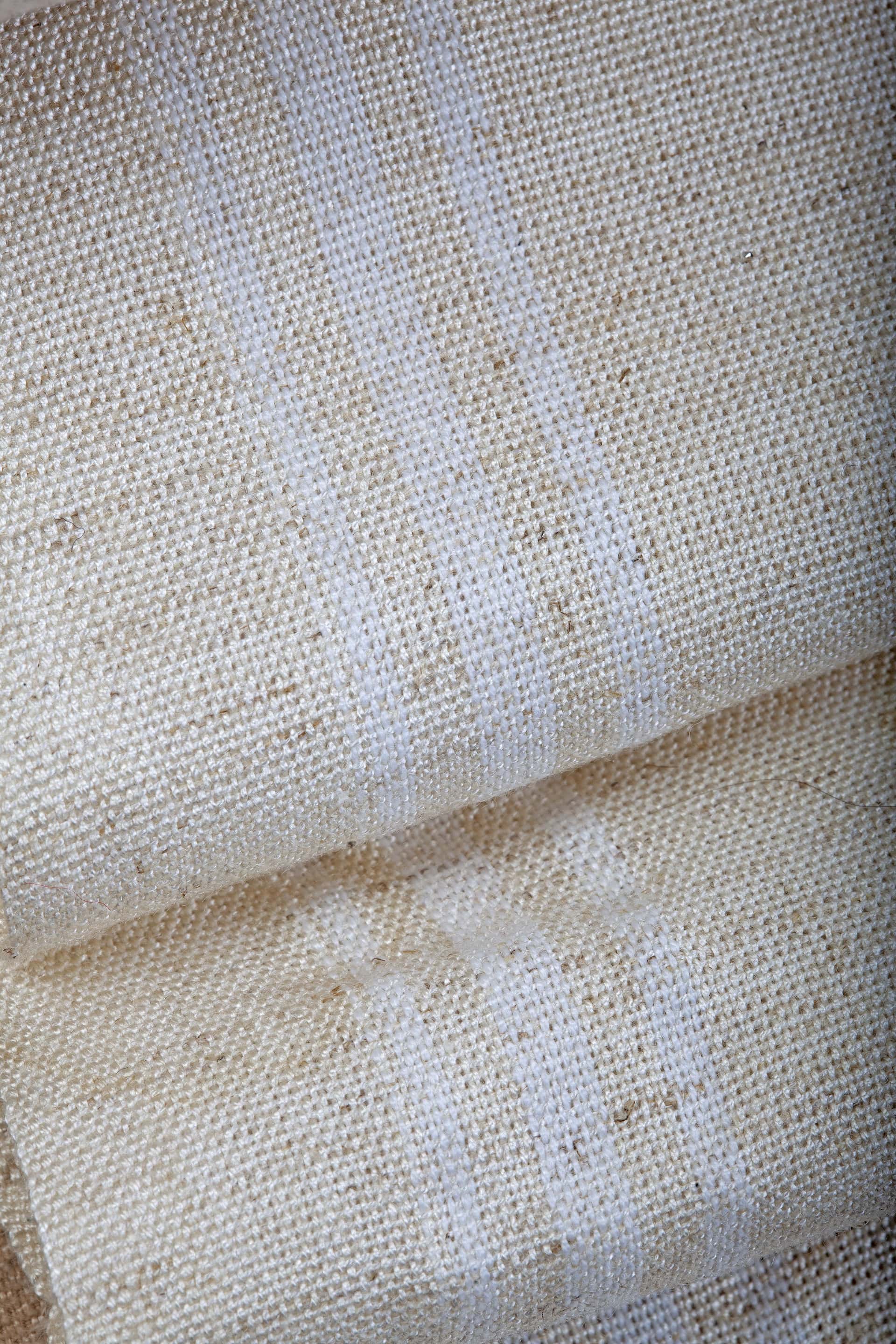
Pembezar weaves are woven with a normal warp, a highly twisted thread, woven in a plain weave weft, and a crimped texture. Pembezar fabric is woven in 40 cm width and washed out. After the weave is washed, the width decreases to 15-20 cm. In some Pembezar samples, self-striped fabrics are made by using warp yarn of different thickness. Although the warp and weft were made of silk in the old samples, today, cotton in the warp and silk in the weft are generally used. Natural colour white cotton and silk are used in the weaving of Pembezar. Sometimes blue, red, orange lines are also woven on the weave edges. Pembezar weave is generally woven without a pattern. In some examples, lines varying in width from half to one centimetre are made on the edges of the weaving, which protects the weaving. Pembezar weave is used as shirt, underwear, bridal veil.