GÜRÜN SHAWL
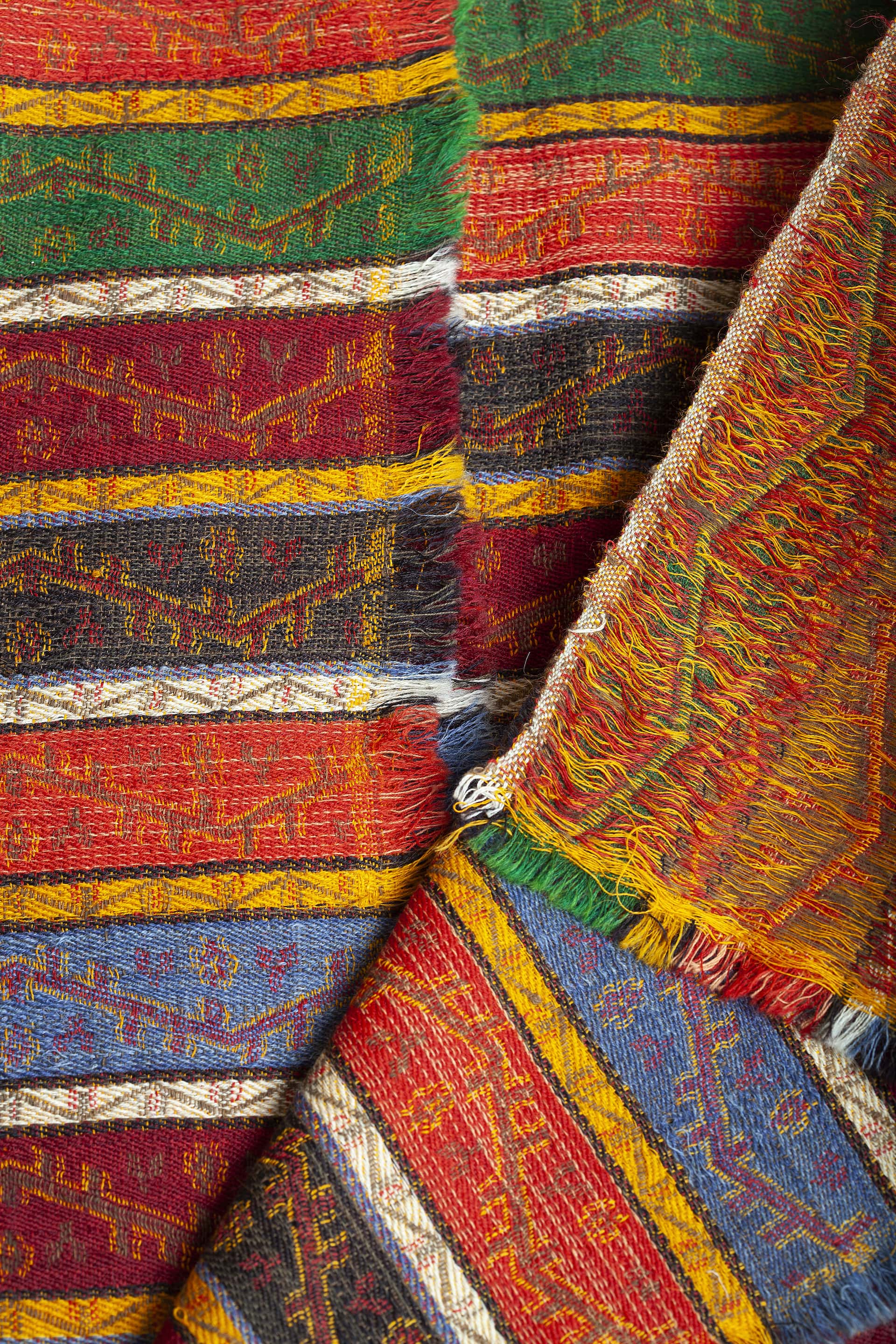
Sivas Gürün Shawl was woven in the Gürün district of Sivas. Gürün Shawl weaving started towards the end of the 19th century in the Gürün district of Sivas. Until the World War I, Gürün Shawl weaving developed a lot. It is one of our discontinued weavings today. However, research is being done to revive it.
Gürün Shawl was woven in plain and twill weaves with multi-colored wefts by using fine wool thread in warps and wefts. It is also known that silk, mohair, and cotton threads were used as materials. It was woven with plain and twill weaves. It is estimated that it was woven with a master and assistant on a loom similar to the Chinese loom with rope pull. It is thought to be most likely the upgraded version of the Beledi loom in Tire, İzmir. Since traditional weaving looms are not available in the region, similar new examples are woven on jacquard looms today. Threads colored natural white wool, natural black wool, red, burgundy, purple, pink, green, khaki, orange, and gray were used in weaving. The patterns of Gürün shawls consist of a mixture of traditional Turkish motifs and the patterns of Indian and Persian shawls. There are four different pattern groups in Gürün shawls: ½ pattern shawls with scattered motifs, shawls with twisted branches, shawls with ivy / ivy branch, shawls with vine branches, and shawls with lines or stripes. On the shawls sent to the palace, there are square-woven patterns which are defined as sheets. It is used as shawls, neck scarves, headscarves, nightgowns, cardigans, vests, caftans, gowns, dresses, belts in clothing, as bundles, covers, chest covers, cushions, door curtains, hoods, turban covers, and coffin covers in home textiles, and as sarcophagus covers in shrines.