SERASER
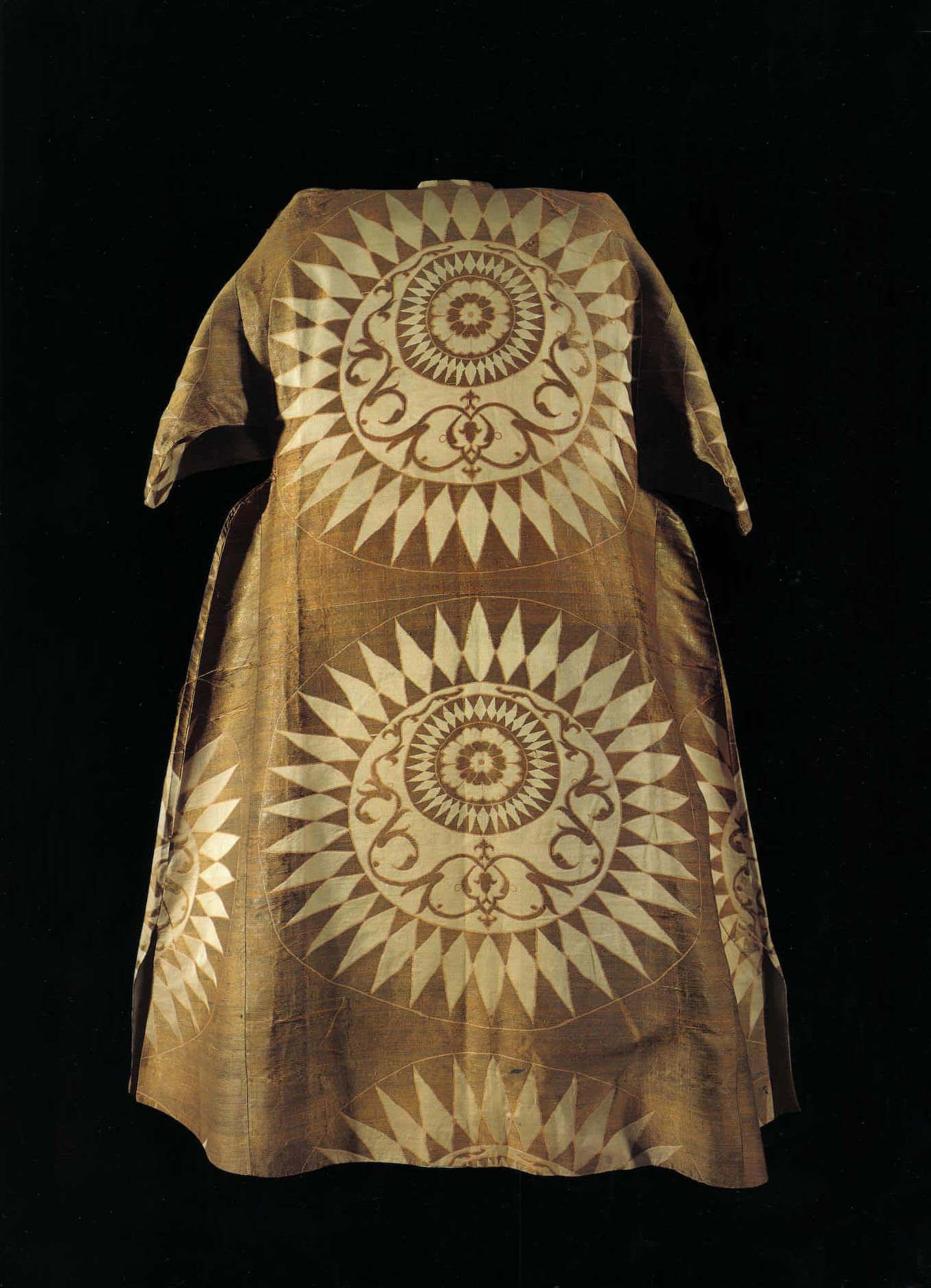
Seraser is the most eye-catching and expensive of the silk fabrics woven with gold and silver wires. For this reason, it is known that it was woven only in İstanbul. Seraser is not found in the Law of the Municipality of Bursa dated 1502. It is a heavy and costly fabric that first appeared in the mid-16th century. It is not possible to get the silver back by melting it from the aging fabric, since there is a lot of gold and silver wire consumption in the weaving of the seraser, and also because the silver loses its properties by being treated twice. For this reason, its production was kept under control, and orders were issued in order to reduce the number of looms processing seraser in the 16th century, and it was requested to weave serenk on the vacant looms. In the Narh Book dated 1640, the fabric is referred to as seraser-i altunum-gümüşüm (gold-silver seraser) and there is a long section describing its quality and patterns. It is understood that it was patterned using, for example, moon embroidered, green contour surrounded; peacock embroidered, green and red contoured; rose embroidered; sycamore embroidered, green and red leaved; moon embroidered, rose sleeved, green contoured; pistachio embroidered, tangled leaved and green contoured motifs. From the information given in this source, it is understood that the fabric was also used by high-ranking officials and wealthy merchants.
Gold alloy silver wire is used in the weft of the weaving, whose warp and weft are silk. In literature, a word of French origin, “taqueté” is also used for seraser. In some types, the wires cover the entire surface of the fabric and dazzle. The pattern almost disappears among the wires. Its weave is a compound one consisting of two or more wefts and two sets of warps, namely one main and one connecting warp. Seraser weavings are silver, chickpea, and pistachio green colored. Since these silk fabrics are special fabrics, their patterns are also very large, unlike the patterns of traditional silk fabrics, they have one or two colors other than gold-silver, and they are different in terms of the layout of the patterns.
Seraser is not a fabric that can be purchased by the public as it is expensive due to its value. In the palace, it was mostly used in khilat (the upper caftan worn by the ambassadors) production. It is a caftan fabric worn by the sultan to impress those who see him, mostly at the reception of ambassadors and when he appears in front of the public with his entourage on horseback. It was also used in the throne furnishings in the palace and in princes’ quilts.