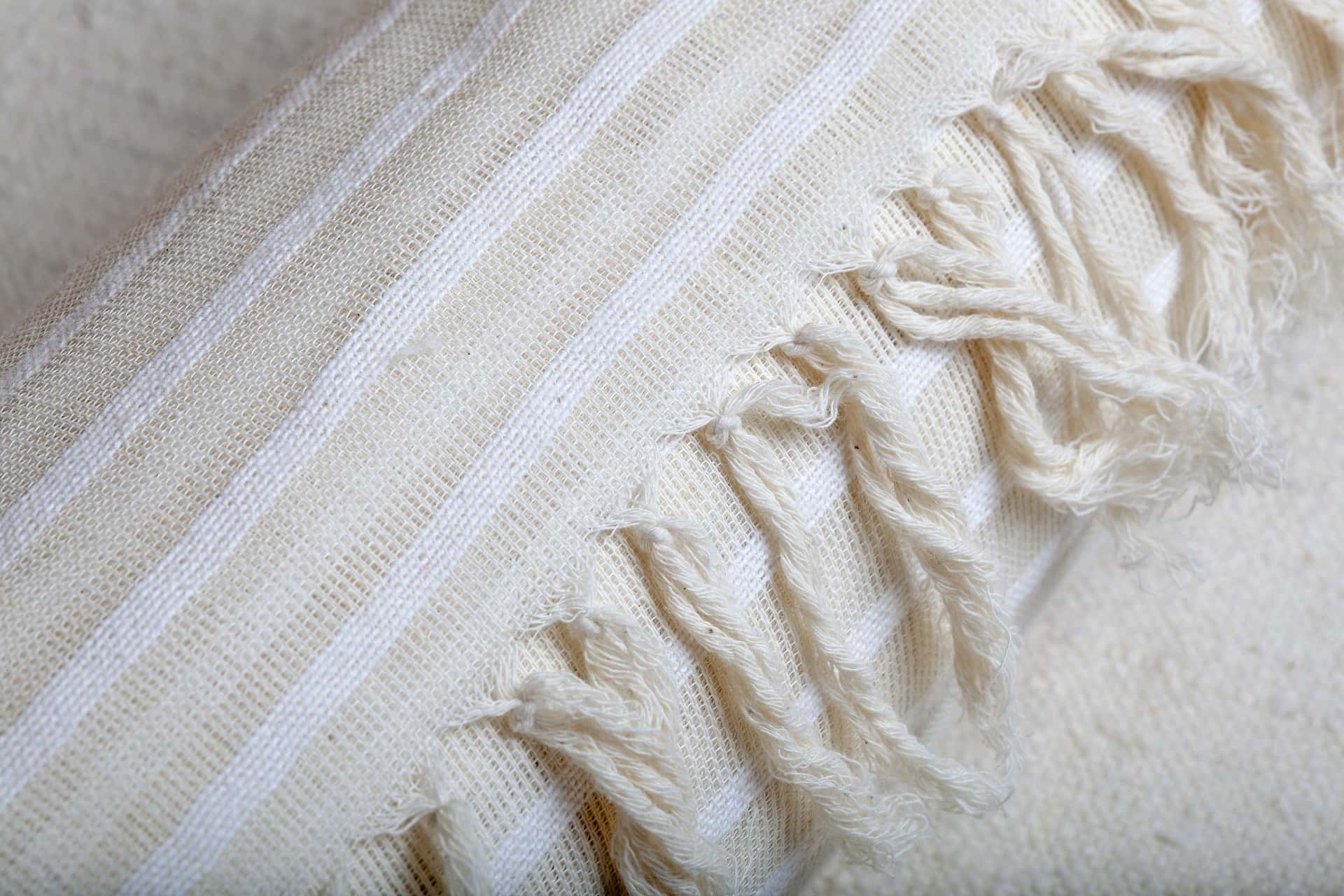
GILAMIK WEAVING
The name of the Gilamik weaving comes from the word gilamik, which means cocoon silk in the Ormana region of Antalya. It is also known as “kılamuk”, “gılamık”, “gılamuk”, “gılamıklı”, and “kılamuklu”. Gilamik weavings are similar to Muğla-Fethiye-Üzümlü weavings and İzmir-Ödemiş-Bürnük weavings. It is known that Gilamik weaving, which is mostly used in home textile today, was used in the production of headscarves in the past. Although there is no clear information in historical sources, it is understood that the history of this weaving in the region goes back many years. It has been observed that it has not been woven in the region for a while, and today it is tried to be kept alive with the efforts of İbradı Municipality and İbradı Ormana Village Özgüven Foundation.
Gilamik is woven with cotton warp and silk weft threads and plain weave with a width of approximately 40-45 cm. After woven in three parts, it is sewn together and used. Thin and thick fabrics are woven according to the fineness and twist of the threads. While Gilamik was woven with silk and cotton materials in the past, today it is generally woven from rayon, linen, and cotton. Natural white silk and cotton threads are used in weaving. Gilamik has patterns called Karadag, Çatal Oluk, Yeni Çatal Oluk, Sınat, Eski Model, Eynif Model, Kızılagaç, and Sögüt. It was used as a headscarf, loose robe (outerwear), bed sheet, and cover.