MARAŞ ABA
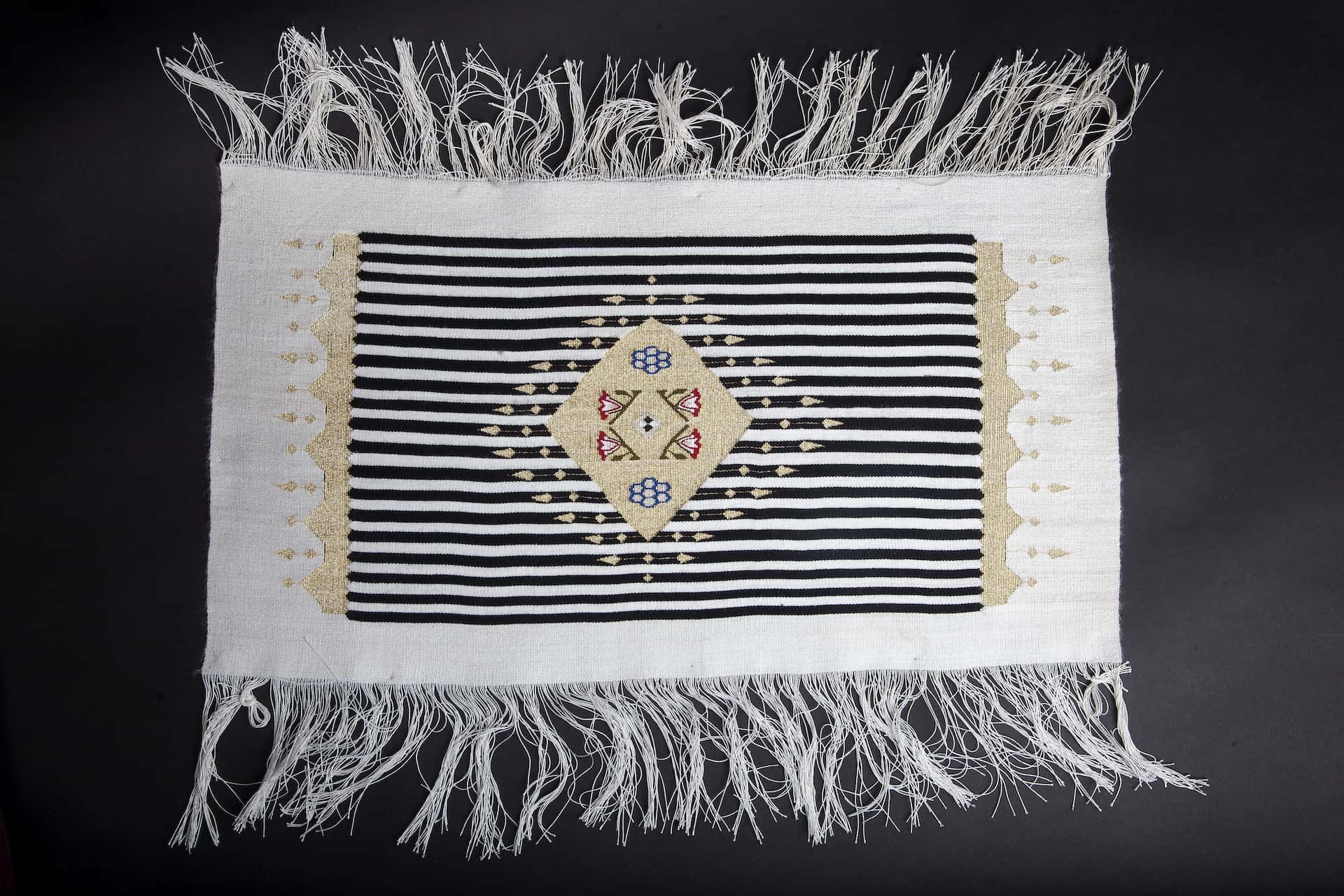
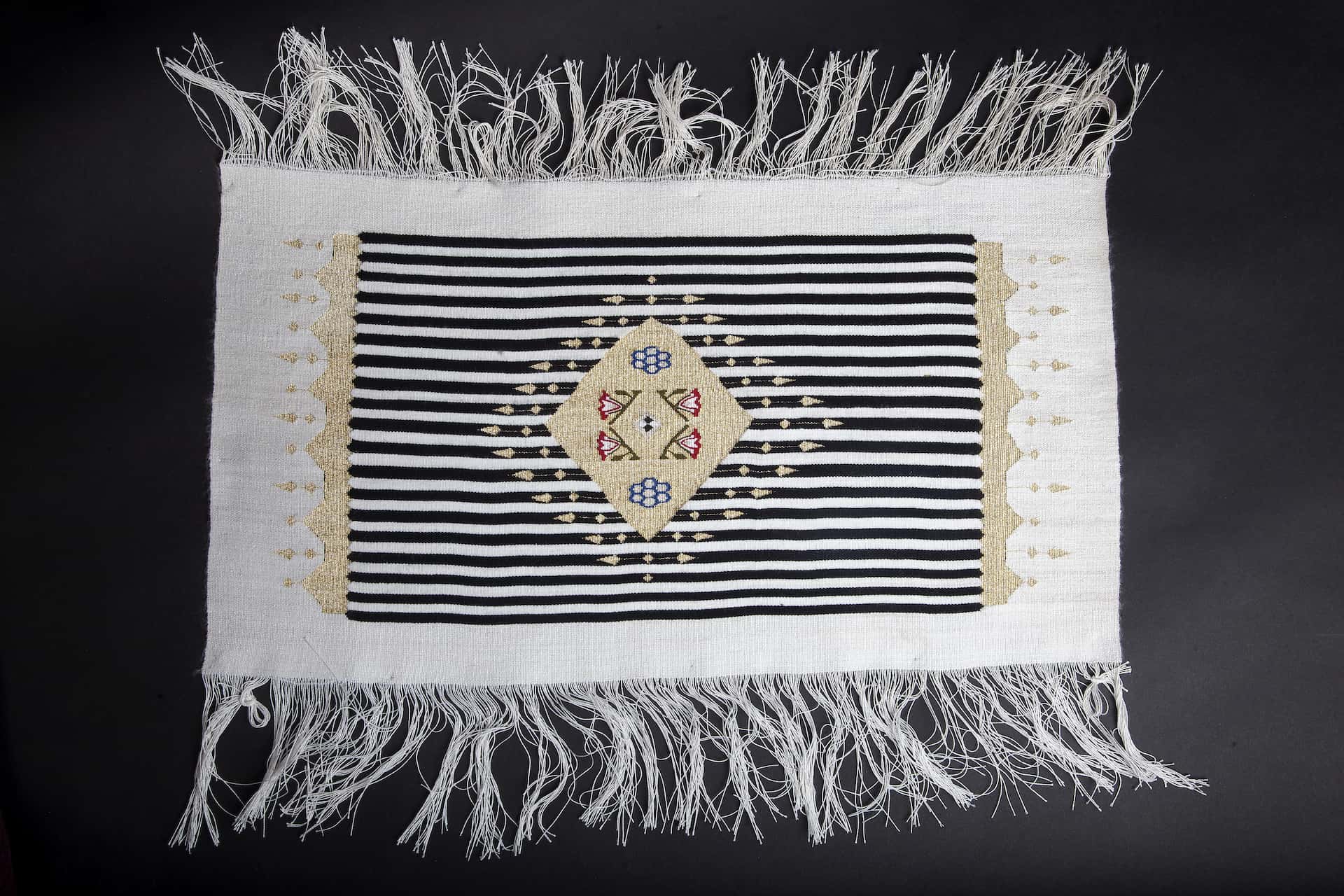
Maraş Aba is a short-sleeved men’s clothing in the form of a robe, which is used as a local dress in Kahramanmaraş and surrounding cities. There are records in the Ottoman annuals between 1867 and 1908 about the Maraş Aba, which was first woven in Syria in the 18th century, stating that it was woven in Elbistan, Zeytun, Andırın, and Göksu towns of Maraş. It is known that Maraş Aba was used in various examples in the Ottoman Palace. A binding cover bearing Sultan Abdülhamid II’s signature is a good example woven with this technique. Foreign travelers Charles Texier and Vital Cuinet make mention of the Maraş Abas and other fabrics woven here. Maraş Aba is woven in the cities of Maraş, Gaziantep, Hatay, Niğde, and İstanbul. In Maraş, which was known to have 300 aba weavers during the Ottoman period, only one weaving master remains today.
Maraş Aba’s warps are woven in plain weaving with wool, while its wefts are woven with wool, purl, or silver thread, and silk thread is used in embroidery; it is woven as sheets to be used for clothing production. In Maraş Aba weavings, the ground is line-based. There are also stylized geometric motifs. Motifs such as şekerpare, cypress, rose from the side, rose upside down, rose in the chest, and neck are frequently used. In weaving, natural white wool color, natural black wool color, green, red, pink, and according to the woven pattern, purl or silver threads are used.
It is used to produce short-sleeved local men’s jackets called Maraş Aba. In addition, Maraş Aba weaving was also used in the production of horse saddles, slipper uppers, gun holsters, binding covers, as well as sofa covers and curtains which were woven for Beylerbeyi Palace.