VELVET
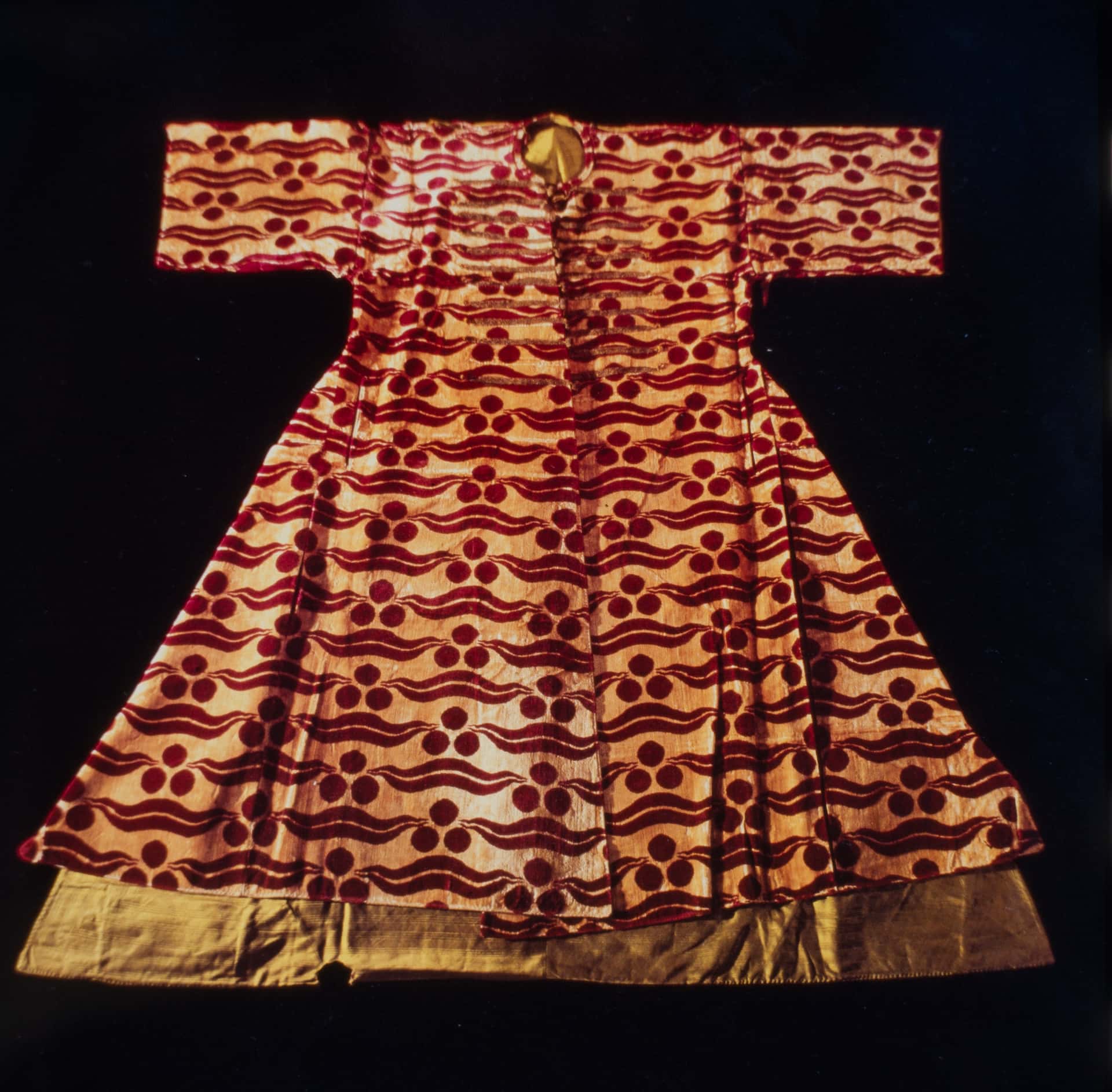
Velvet was woven especially in Bursa and İstanbul during the Ottoman period. Velvet weaving, which has a complex structure, is later than other silk weavings. It is understood that it was seen in the East in the 8th-9th centuries, then passed to the West and developed there. In the 15th century, Ottoman velvet making manifests itself with Bursa velvets. In eastern sources, the name “Turkish velvet” is first mentioned as part of the bride-wealth given to Sultan Murad (1360-1389) by Karamanoğlu Alaaddin Bey when he married Melek Hatun (in 1378 or 1381), daughter of Murad I. However, information about the existence of Turkish velvets was found after the conquest of İstanbul during the Ottoman period, especially during the reign of Fatih. The standards of fabrics were specified in the Municipality Laws prepared in 1502 for the cities of İstanbul, Bursa, and Edirne. The following information is given about velvet in the code: “... every wire of the pile will be bent, and every part of the color will be the same. For several years, some of the wires of the pile are bent while others are not. The ones that are not bent are thin. If the 45-50 wires of the gilt velvet weigh one dirham, the fabric is then strong and shiny.” Issues related to the dyeing of the warp, weft, and pile threads of velvets are also covered extensively. It is understood from the customs books that Bursa fabric velvet pillowcases were very popular in the West and an important export commodity.
Compound weaving is a pile fabric whose warp and weft are silk and includes gold wire according to its pattern. It has been used in clothing and upholstery. Its pile is made from pile warps put between the main warps. The velveting technique is very diverse in terms of the places it is used and the material it contains. Velvet is woven as four main types, namely “plain”, “gilt” (with gold, gold-threaded), “dotted” and “patterned”. There are examples where plain velvets are sometimes patterned with a hot stamping mold after being woven. Considering the colors, gold and silver wires on the violet/dark red ground are mostly used. Velvets have a medallion scheme in horizontal order enriched with Rumi folds in the 15th century. In the middle of the 16th century, a floral style inspired by nature emerged in Ottoman art with motifs such as roses, tulips, carnations, and japan quinces. This style was also found on Ottoman velvets. The pattern, in which eight-slice, star-like flowers placed on a sliding axis fill the entire surface, is the most common pattern used in Bursa velvets from the 16th to the 18th centuries.