AĞABANİ / AĞBANİ / ABANİ
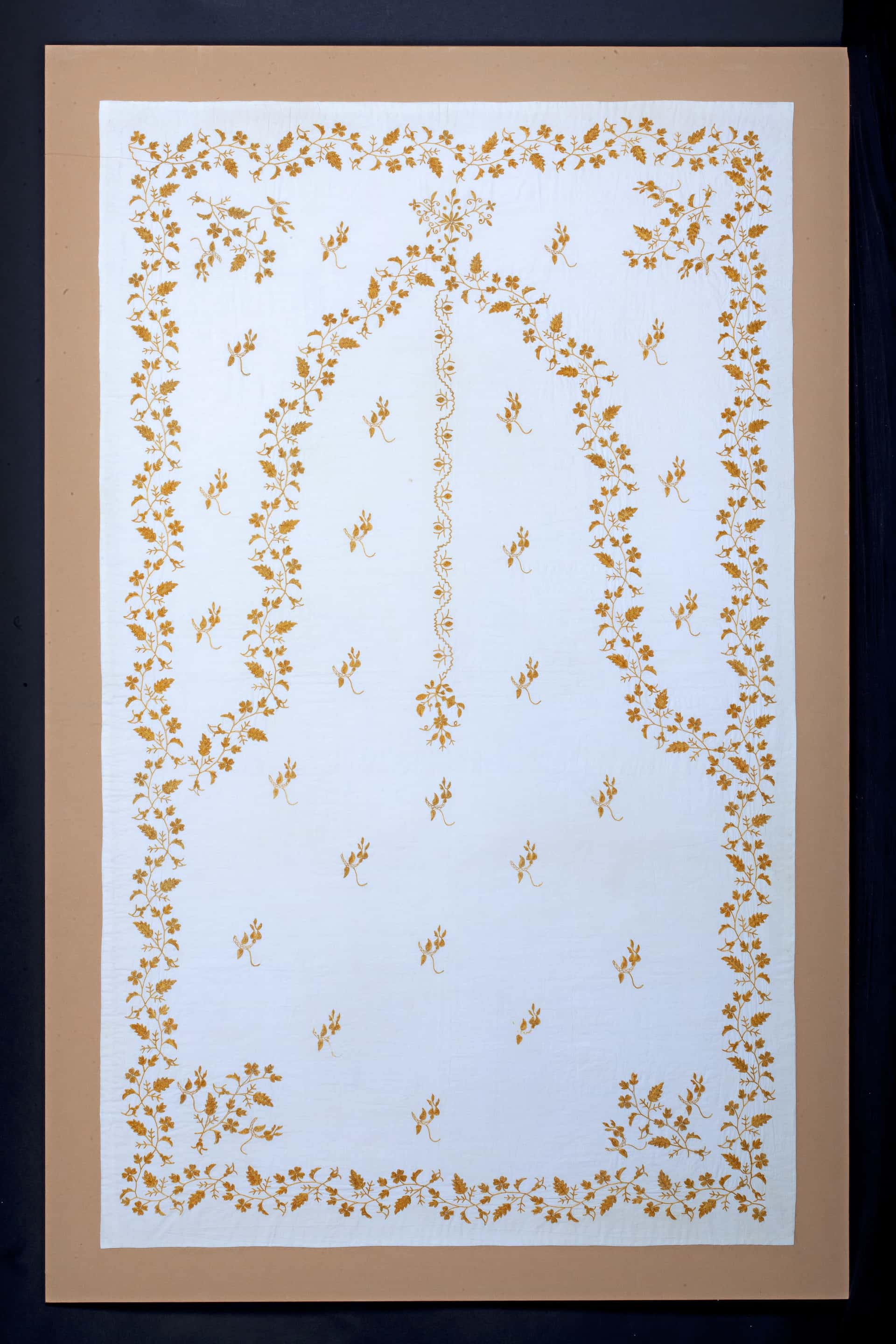
Ağabani / Ağbani/ Abani is woven in plain weave with silk warp and cotton weft. It was woven in Ağabani, Bursa, surroundings of Denizli, and İstanbul. A record of “ağabani cheesecloth” was found in an estate belonging to the middle of the 16th century. The name of the fabric “Nevzuhur Ağabani-i Hind”, that is, the newly emerged “Indian ağabani” fabric, was noted in the 1835 customs registry records. However, the cost of importing Indian fabrics led to the production of their imitations. It has been understood that these imitations were produced in three different ways in Bursa: In the first, the fabric is woven on local looms. In the second, the pattern of the original is embroidered directly onto plain white cotton. In the third, embroidery in the chain work technique is applied on a cloth woven with white and yellow. It has been observed that the chain embroidery technique was applied as a roller print between the paths of the path-patterned cotton fabric examined in the Yusuf İyilik Collection.
In the Bursa Yearbook of 1883, the pattern of the ağabani is defined as: “with tiny branches and paths”. Ağabani was worn by tradesmen and merchants. Bursa’s ağabani was popular. Halil İnalcık noted that “the fabric referred to as ‘açabani’ (atchabannies) in the East India Company records was probably ağabani, made in Bengal and imported to Turkey in the 19th century”.
In ağabani weavings, the warp is silk and the weft is cotton. Like Bilecik velvet, ağabani is woven in plain weave by two people helping the weaver by pulling the fabric the other way around. The colors used are white (ecru) and saffron yellow. Ağabani is characterized by white ground and saffron-colored branches. In Turkish, ağbani has survived as turban. Saffron, which is a medicinal plant, is also used in dyeing and gives a golden yellow color. It is thought that the weavings similar to ağabani in the Aegean Region today, especially in Denizli and its surroundings, originate from Bursa ağabanis. The fabric with tiny branches and paths, flowers, patterned with saffron yellow silk on a white ground, is in straight or diagonal ways on turbans and caftans. In quilts, pillows, and bundles, closed compositions are created with borders and in the center and corners. Looking at the existing examples of ağabani fabric, we can say that it was used as a material in turbans, quilt covers, sofa pillows, bundles, baby swaddles and women’s dresses.